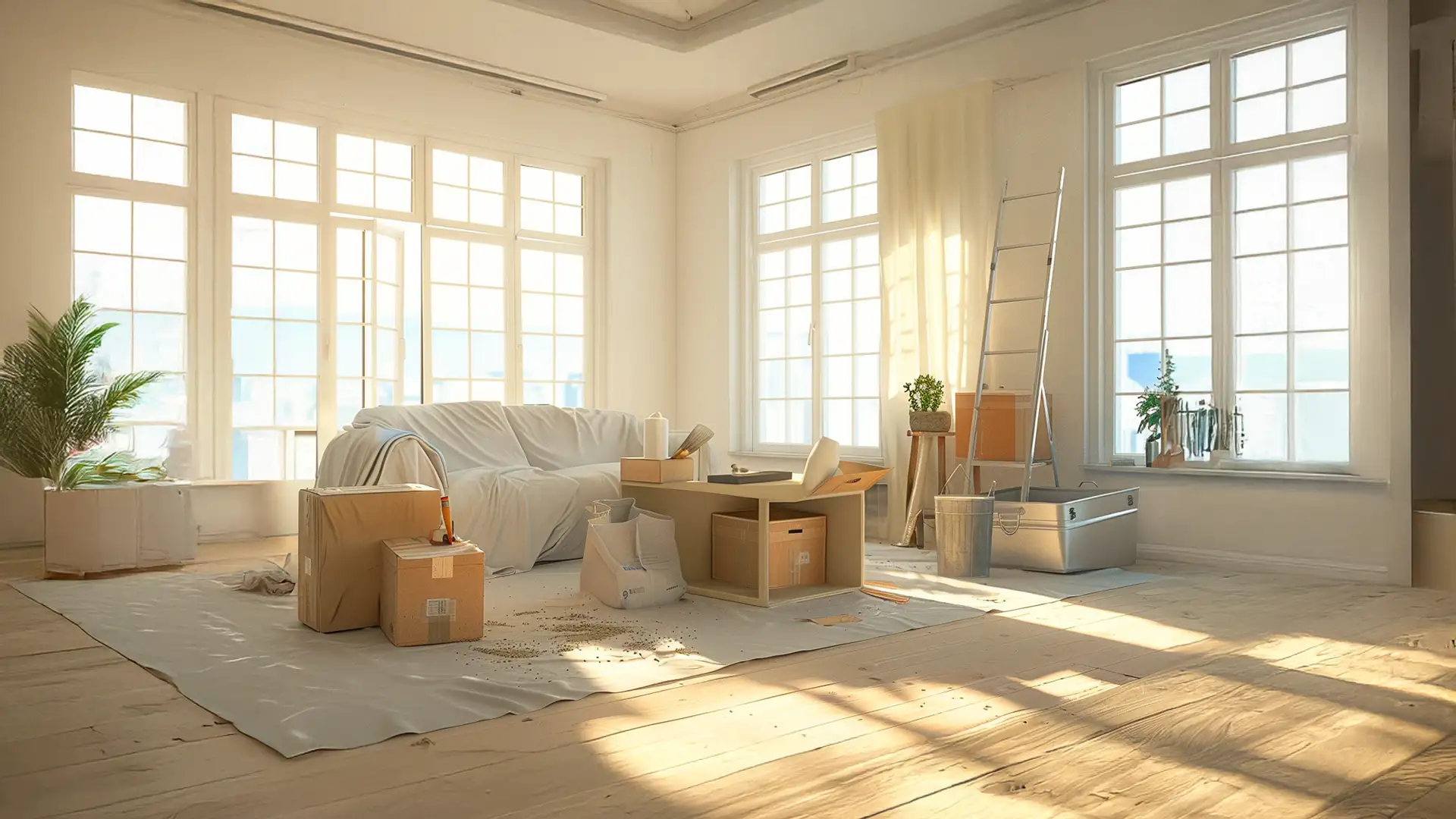
Renovating your home? Free up space and protect your belongings
Painting, new floors, kitchen or bathroom makeover… During renovation, how do you free up space and protect furniture, appliances and cherished items, at home or in self-storage?
New paint, fresh flooring, a redesigned kitchen, a revamped bathroom… Renovating your home is exciting. But once the dust sheets and tools arrive, reality often sets in: crowded rooms, stacked furniture, dust everywhere and a real risk of damage. The key is to anticipate, clear space and, if needed, move part of your belongings into a self-storage unit for the duration of the works.
Why clear space before starting renovation?
Simply “pushing furniture to one side” may sound practical, but it rarely works well in real life.
- Tradespeople need space to move around and set up their tools properly.
- Dust, paint and plaster will reach anything left in the room.
- Impacts and knocks are common when moving ladders, plasterboards and tools.
- You end up living on a building site if all your furniture stays in the room.
- Delays can increase if workers constantly have to work around furniture.
By really clearing the room (or at least freeing as much space as possible), you help speed up the work and avoid damage.
Step 1: declutter before you move anything
Before shifting furniture and boxes, take the opportunity to declutter.
- Empty any furniture you plan to move or renovate (sideboards, bookcases, chests of drawers).
- Sort items into four groups: keep, donate/sell, recycle, store separately.
- Let go of items you will not want back after the renovation.
- Pack “off-site” boxes for belongings you want to keep but not leave in the work area.
- Group fragile or sentimental items into clearly labelled boxes.
Every object that you donate, recycle or move into storage is one less thing at risk during the works.
What can stay in the flat – and under what conditions?
Not everything can be removed, especially if you are renovating several rooms at once.
- Heavy or hard-to-dismantle furniture: pull it away from work zones and cover it carefully.
- Built-in appliances: protect them with thick covers, cardboard and masking tape.
- High cupboards: empty them if walls or ceilings nearby are being painted.
- Small electronics: best removed from the work area entirely.
- Textiles (curtains, rugs, fabric sofas): always take them out of rooms under renovation.
The more you leave on-site, even covered, the more dust will find its way everywhere – a strong argument for storing some belongings elsewhere.
Where to put your furniture during renovation?
Several options exist, but not all offer the same level of protection and comfort.
- Friends or family – good for a few boxes, less ideal for a full living-room.
- Damp cellar or old garage – beware of humidity, smells and potential theft.
- Other rooms in the flat – workable for small projects, but your home can become unliveable.
- Self-storage unit – the most flexible option for furniture, boxes and appliances for a few weeks or months.
In Bayonne, Anglet and Biarritz, just a few square metres of self-storage are enough to free a kitchen, living-room or several rooms under renovation, for example by renting a unit in our Anglet centre or choosing self-storage in Biarritz.
Protecting belongings during renovation
Whether they stay at home or go into storage, your belongings need proper protection.
- Sofas and armchairs: protective covers, blankets and stretch wrap if transported.
- Tables, sideboards and wooden furniture: thick blankets and edge protection.
- Appliances: unplugged, emptied, defrosted if needed, with doors left ajar to avoid bad smells.
- Fragile objects: individually wrapped (bubble wrap or tissue paper) and securely packed.
- Important papers and keepsakes: stored in archive boxes or sealed plastic crates.
In a self-storage unit, your belongings are protected from renovation dust, which makes final cleaning much easier.
What size unit for a home under renovation?
The size depends on how many rooms are affected and how much you decide to keep on-site.
- 2–3 m² to clear a bedroom (bed, mattress, chest of drawers, clothes boxes).
- 3–4 m² for a living-room (sofa, TV unit, table, chairs, decor boxes).
- 4–5 m² for a kitchen plus living area (lower units, appliances, table and everyday dishes).
- 5–8 m² to store the main furniture of a flat during major renovation.
Use our size calculator and tell our team about your project to get tailored advice.
Organising a “renovation & works” storage unit
A well-organised unit will save you time before, during and after the renovation.
- Put long-term items at the back (books, archives, decor, keepsakes).
- Keep priority boxes at the front (everyday dishes, bedding, small appliances).
- Line furniture along the walls and keep a central aisle.
- Use vertical space with shelving or stable box stacks.
- Label each box clearly with room and main contents.
Your unit becomes a temporary extension of your home, easy to empty as the work progresses.
Living in the flat while renovating: making it manageable
If you stay in the property during the works, a storage unit is a great way to avoid living in a warehouse.
- Empty the room under renovation completely so it can function as a true worksite.
- Move non-essential furniture and rarely used items into the unit.
- Keep a minimal kit in each living area (basic dishes, small table, simple seating).
- Use the renovation as a chance to rethink what will come back into the space.
- Schedule works room by room, rotating furniture through the unit.
Case study: renovating without living in a sea of boxes
In Bayonne, Aina and Julien fully renovate their living-room and kitchen: new paint, new floors and a custom kitchen. Instead of piling the sofa, appliances and boxes into the bedrooms, they rent a 5 m² unit on the BAB. For two months, they store all living-room furniture, large appliances and part of their dishes there. They keep only a small table, a few chairs and simple cooking gear in a room outside the work zone. The result: smoother work for the tradespeople, less damage and a more livable home during renovation.
You might also like
- Declutter before renovation to reduce what you have to move and protect.
- Fully clear work areas rather than just pushing furniture to the middle of the room.
- Use a self-storage unit to protect furniture, appliances and fragile belongings from dust and damage.
- Organise your unit so you can easily retrieve essentials as the work progresses.
- Take advantage of renovation to simplify and rethink your home layout.
Planning renovation work in Bayonne, Anglet or Biarritz? With a mix of smart sorting, planning and self-storage on the BAB, you can free up space for tradespeople, protect your belongings and make the whole project much easier to live through. Estimate your needs, explore our centres and book your unit online in just a few clicks.