Home renovation: how to protect your household appliances
Dust, shocks, humidity… Renovation work can damage your fridge, washing machine or oven. Learn how to prepare, protect and store your appliances safely in the Basque Country.
Renovating a kitchen, knocking down a wall, changing the flooring… As soon as your home turns into a building site, household appliances are on the front line. Dust, paint, bumps, repeated moves – all of these can shorten the life of a fridge, washing machine or oven. The good news: with a few simple habits and, if needed, a nearby self-storage unit, you can protect your appliances throughout the works.
Why renovation work is risky for appliances
We tend to think about walls and floors first, but electrical appliances often take the hit when works are poorly prepared.
- Fine dust from sanding and cutting can infiltrate vents, motors and electronic boards.
- Bumps and scratches may occur when moving furniture, materials and tools around the room.
- Occasional humidity (plaster, paint, cleaning) can affect electrical components.
- Poor support or tilting while moving heavy appliances.
- Improvised power connections on overloaded extensions to keep appliances running in the middle of the works.
The first step is to decide which appliances must stay in use and which can be disconnected, moved or stored until the renovation is complete.
Step 1: decide what stays, what moves and what goes to storage
Before tradespeople arrive, take inventory room by room.
- List all appliances: fridge, freezer, washing machine, dryer, dishwasher, oven, hob, hood, small appliances.
- Identify essential items for daily life during the works (often a fridge and, if possible, a washing machine).
- Locate high-impact work zones (demolition, sanding, tiling) where no appliance should remain.
- Set up a “safe zone” elsewhere in the home for one or two appliances you want to keep running.
- Plan external storage for everything else: a clean, dry, secure storage unit often makes more sense than piling appliances in the living-room.
Step 2: prepare each appliance before moving it
Whether appliances stay in the home or go to storage, proper preparation is key to avoiding damage.
- Unplug completely and turn off water supplies (for washing machines and dishwashers).
- Empty all contents: food, shelves, drawers, filters, residual water.
- Give a quick clean inside and out to prevent bad odours during storage.
- Secure cables with tape or ties so they do not snag during transport.
- Protect fragile parts (glass doors, control panels, edges) with cardboard and bubble wrap.
Special cases: fridge, freezer, washing machine and oven
- Fridge / freezer: defrost, dry thoroughly and wedge the door open slightly while in storage to prevent mould and odours.
- Washing machine: drain hoses, dry the door seal and, if available, refit transport bolts to secure the drum.
- Dishwasher: empty the filter, leave the door ajar and make sure the interior is dry.
- Oven: remove racks and accessories, protect the glass door and lock it if possible.
Step 3: protecting appliances that remain in the home
For appliances you keep on site, the priority is to protect them properly and keep them accessible.
- Move them away from the work zone whenever possible (to a hallway, spare room or corner of the living-room).
- Raise them slightly off the floor if you expect splashes or wet cleaning.
- Cover them securely with suitable covers or strong dust sheets taped in place (without blocking hot surfaces or vents).
- Maintain ventilation around air inlets and outlets.
- Keep plugs and water valves accessible in case you need to switch off an appliance quickly.
Step 4: storing appliances in a self-storage unit
For major works or in small homes, moving appliances into a storage unit for a few weeks is often the safest and most convenient option.
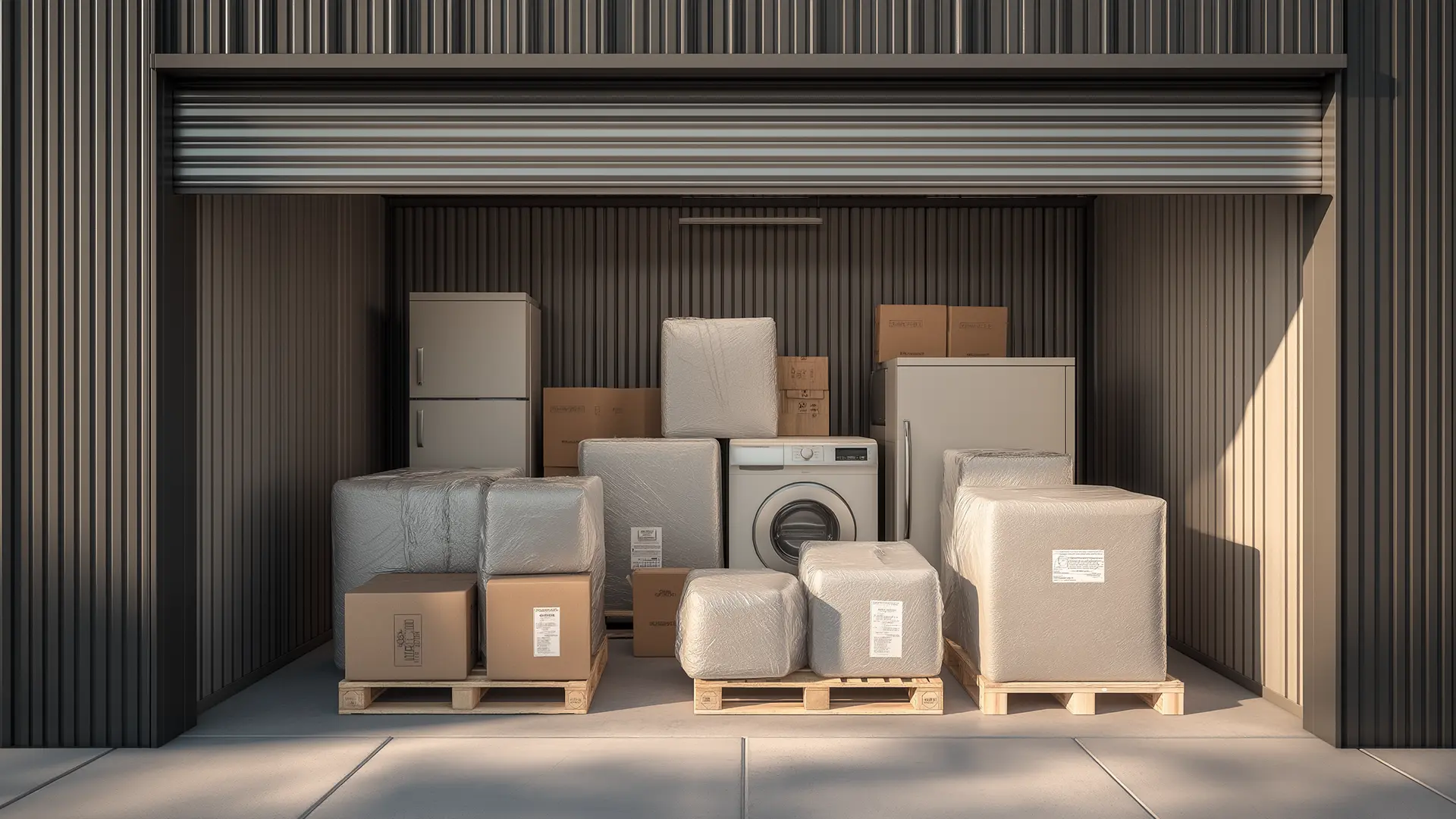
In a self-storage centre in the BAB area (Bayonne, Anglet, Biarritz), such as our Anglet facility, your appliances are kept in a clean, dry, ventilated and secure environment – and if you live in Biarritz, you can also choose self-storage in Biarritz. A few tips:
- Transport tall appliances upright whenever possible, especially fridges and freezers.
- Use a trolley and straps to limit shocks and make handling easier.
- Place appliances on pallets or blocks rather than directly on the floor.
- Leave space around them so that air can circulate and you can move them later.
- Keep small parts and accessories in a clearly labelled box stored next to the appliances.
You can estimate the unit size you need for your appliances using our online volume calculator and the advice of our local teams.
Case study: a kitchen renovation without sacrificing appliances
In Anglet, Anaïs and Julien are fully renovating their kitchen. To avoid working around appliances, they keep only a small fridge and microwave in the living-room and move their main fridge-freezer, dishwasher and washing machine into a 3 m² storage unit nearby. Prepared and protected in advance, the appliances stay in storage for six weeks while tradespeople work faster in a completely clear kitchen. At the end of the project, the couple brings back each appliance one by one and reinstalls them in a brand-new kitchen.
Step 5: putting appliances back into service
Once the work is finished, take a moment to restart each appliance safely.
- Dust vents, seals and controls and check that nothing blocks air circulation.
- Inspect cables and plugs carefully before reconnecting.
- Let fridges/freezers stand upright for several hours after transport before switching them back on.
- Run a short empty cycle for washing machines and dishwashers to rinse any residue.
- Monitor the first uses (noises, leaks, vibrations) and stop immediately if something looks wrong.
More ideas for renovation and temporary storage
- Decide early which appliances must stay in use and which can be stored.
- Prepare and protect each appliance properly before moving it.
- Use a self-storage unit as a safe, neutral place for large appliances during major works.
- Keep access clear to plugs and water valves for appliances that remain in the home.
- Restart appliances gradually and check them carefully after the works.
Planning renovation work and worried about your appliances? With a few simple habits and a self-storage unit in the Basque Country, you can protect your fridge, washing machine and oven while making space for tradespeople to work comfortably. Estimate your needs, choose the most convenient centre and book your unit online in just a few clicks.