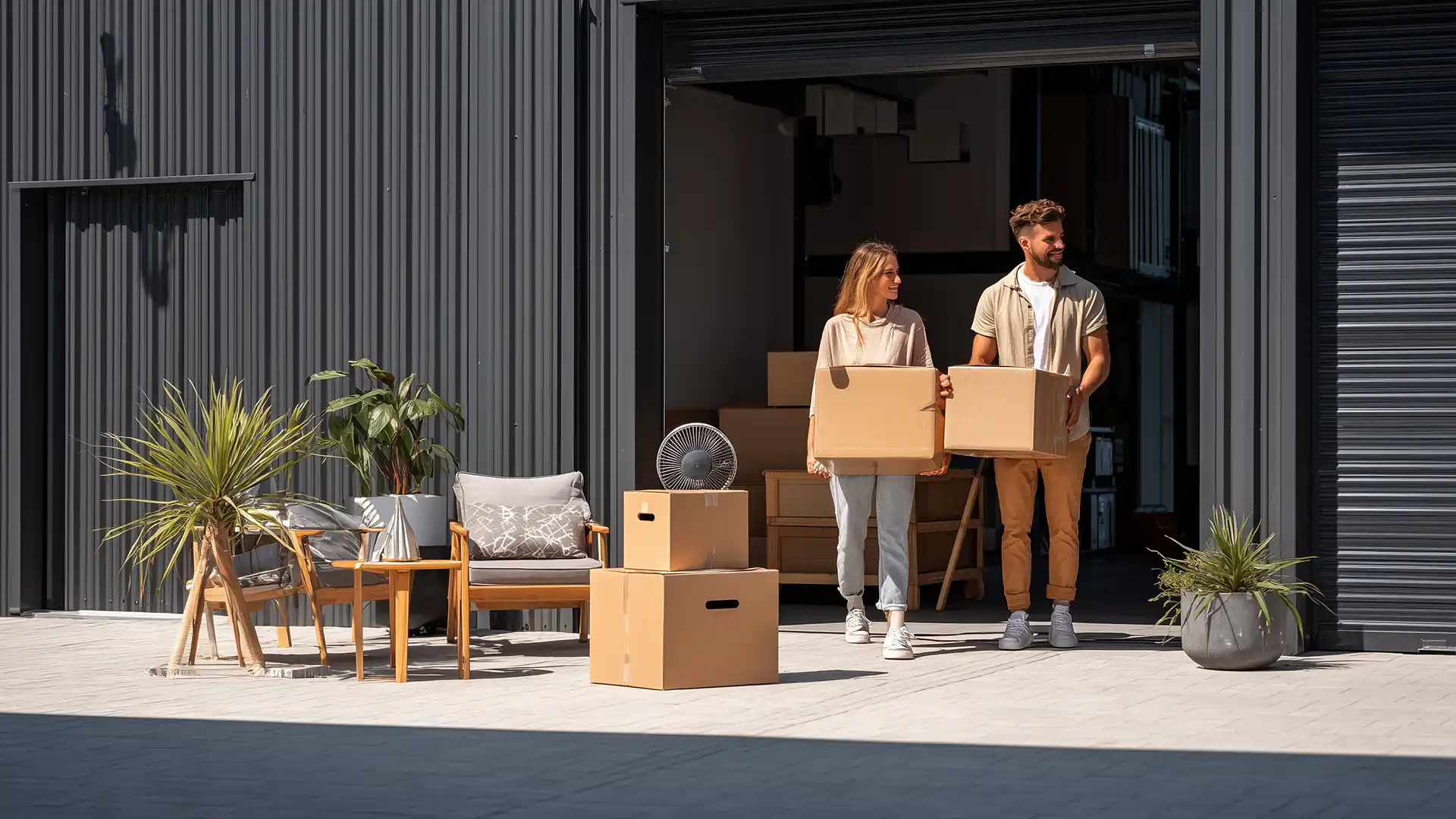
Moving in summer? Tips to store your belongings smartly
Heat, tight schedules, school holidays… A summer move can be tricky. Tips to declutter, pack and use self-storage smartly on the Basque coast.
On paper, moving house in summer sounds ideal: long days, good weather, time off work. In reality, between the heat, busy schedules, children at home and fixed handover dates, a summer move can quickly become stressful. The key is to anticipate, sort and use a self-storage unit as a flexible buffer space before, during and just after the move.
Why is a summer move different?
Before thinking about boxes, it helps to understand the specifics of moving in summer.
- Heat makes every task harder: carrying heavy boxes, loading appliances, going back and forth to the van.
- High demand period for moving companies, rental vans and lift bookings.
- School holidays mean children are around and need to be looked after during peak moving days.
- Fixed dates for inventories, key handovers and entry into the new home.
- Tourist season and traffic on the Basque coast, which can complicate parking and journeys.
Preparing a summer move means spreading the workload over several weeks and using a unit as a “buffer zone” so you do not have to do everything in 48 hours.
Step 1: declutter in advance to lighten the move
The more you move, the longer, harder and more expensive it becomes. Summer is the perfect time for a clear-out.
- Start sorting 4–6 weeks before: paperwork, clothes, books, toys, decor.
- Use the “keep / donate / sell / recycle / store” rule on each category.
- Take advantage of flea markets and second-hand platforms to sell good-condition items.
- Identify items you will not need for several months (seasonal gear, keepsakes) and send them straight to storage.
- Prepare separate boxes for long-term storage and for the new home.
Every item you donate, recycle or move straight into storage is one less box to carry on moving day.
Step 2: use a unit as a buffer between homes
Self-storage’s key advantage in summer is that it decouples moving out from moving in.
- Empty and clean the old flat by moving furniture into a unit a few days before the final inspection.
- Avoid overloading the new home if it is not quite ready (painting, cleaning, small works).
- Store temporarily any furniture you are unsure about or that does not yet fit.
- Gain flexibility on your final move-in date.
- Handle delays (keys, building work) without last-minute panic.
In Bayonne, Anglet and Biarritz, where many homes are compact, a unit often becomes a temporary extra room for the whole moving period.
What size unit for a summer move?
The right size depends on whether you are storing the whole flat, just one room or only specific items.
- 2–3 m² to store a bedroom (bed, mattress, chest of drawers, clothes boxes).
- 3–4 m² for a living-room (sofa, TV unit, table, chairs, boxes).
- 4–5 m² for a partially stored 1- or 2-bedroom flat (main furniture + bulky boxes).
- 5–8 m² for most of the contents of a flat during a full transition.
Use our unit size calculator and describe your home to our teams in Bayonne, Anglet and Biarritz for tailored advice.
Step 3: pack smart for hot weather
Heat changes how you should pack and transport boxes and fragile items.
- Use medium-sized boxes to keep weights manageable in hot conditions.
- Avoid overloading with books and papers; spread them over several boxes.
- Protect heat-sensitive items (candles, some products, wine, instruments) and avoid leaving them in a hot vehicle.
- Group boxes by room to make storage and unpacking easier.
- Number boxes and keep a list on your phone to find key items quickly.
Step 4: organise the unit for a smooth move
A well-organised unit will save you time when moving in and out.
- Place long-term items at the back (archives, keepsakes, seasonal decor).
- Keep priority boxes at the front (bedding, basic kitchenware, current-season clothes).
- Store bulky furniture along the sides and use vertical space for strong, stackable boxes.
- Create a central aisle so you can reach the back without moving everything.
- Sketch a simple plan or take a photo of the loaded unit for reference.
Managing key dates in a summer move
A unit also helps you breathe when it comes to timing and deadlines.
- Book early for vans and units once you know your dates.
- Shift non-essential items (archives, decor, seasonal gear) ahead of the main moving day.
- Use a “staging area” in the unit for items that will come last into the new home.
- Keep a “survival box” at home with bedding, towels, basic dishes and a few toys for the first nights.
- Schedule admin tasks (utilities, internet, insurance) away from the peak moving days.
Case study: a smoother summer move thanks to storage
In Biarritz, Maud and Alexandre leave their 1-bedroom flat for a 2-bedroom in Anglet in mid-July. The new flat is not available until a week after they must vacate the old one. Instead of filling friends’ garages, they rent a 6 m² self-storage unit on the BAB. On day one, they move most of their furniture and boxes into the unit. They keep only essentials for a few nights in temporary accommodation. Once they get the keys to the new flat, they empty the unit in several cooler morning trips. The result: less pressure, more flexibility and a much more manageable summer move.
You might also like
- Start decluttering several weeks before your summer move.
- Use a storage unit as a flexible buffer between your old and new homes.
- Choose a unit size that matches your furniture and boxes, not just your flat size.
- Pack and organise boxes with heat and heavy lifting in mind.
- Plan your schedule around the unit to handle dates and delays more calmly.
Planning a summer move in Bayonne, Anglet or Biarritz? With smart sorting and a self-storage unit in the Basque Country, you can turn a hot, stressful move into a controlled project. Estimate your needs, explore our local centres and book your unit online in just a few clicks.