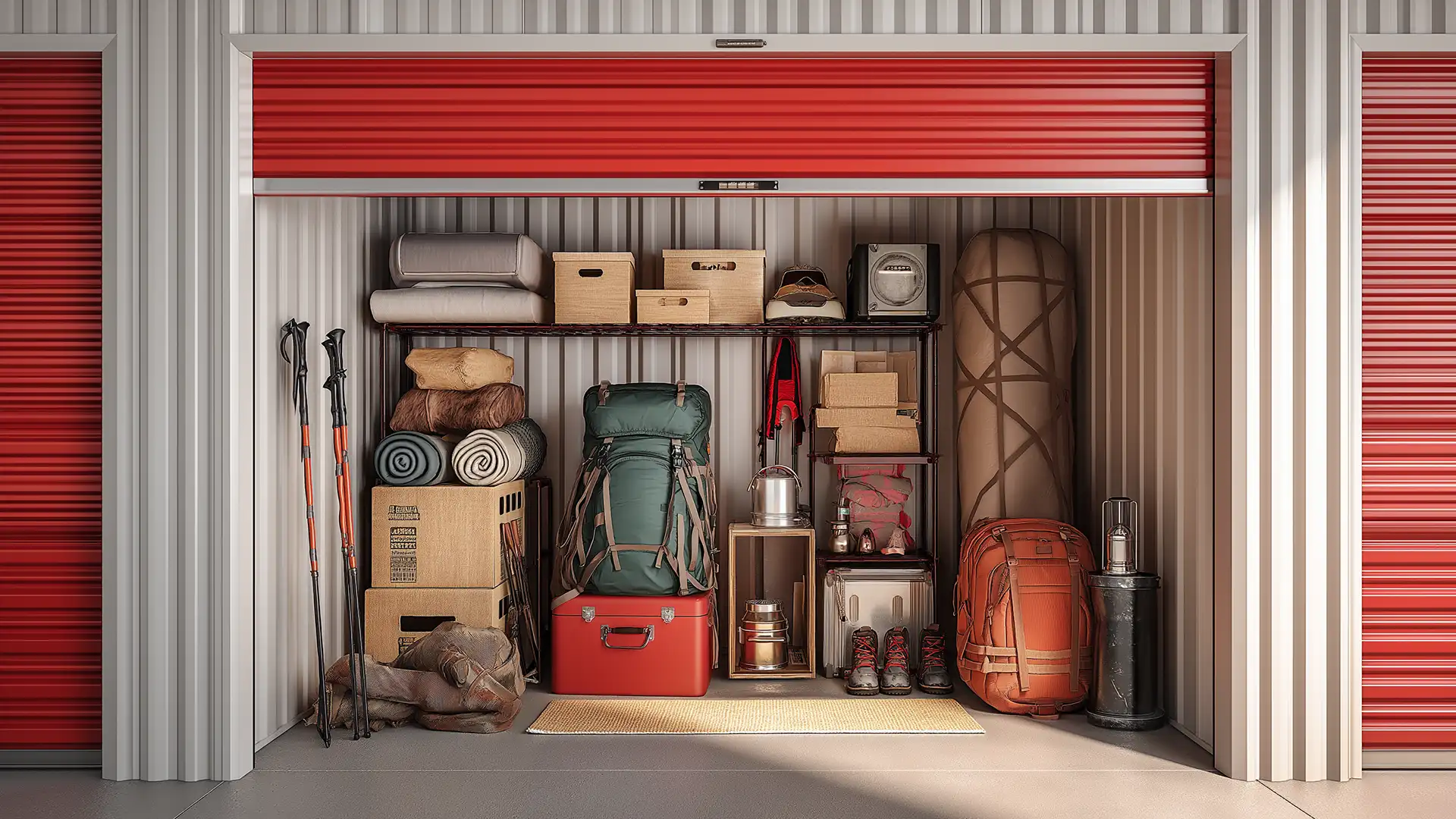
Hiking gear: where to store it off-season?
Backpacks, boots, poles, tents and sleeping bags… Tips to store your hiking equipment off-season, at home or in a self-storage unit in the Basque Country.
From coastal paths to mountain ridges, the Basque Country is perfect for hiking. Over time, gear tends to pile up: backpacks, boots, poles, tents, sleeping bags, stoves… Once the main hiking season is over, all this equipment often ends up in a messy corner of the hallway, cellar or garage. Here is how to store your hiking gear off-season without cluttering your home – and when it makes sense to move it to a self-storage unit.
Why hiking gear takes over your home off-season
Each item may not seem that big, but together they quickly fill wardrobes and cupboards – especially in compact flats around Bayonne, Anglet and Biarritz.
- Backpacks hang behind doors or pile up in the entrance.
- Hiking boots line up in the hallway with everyday shoes and sneakers.
- Tents, sleeping mats and sleeping bags are squeezed into the back of cupboards, garages or cellars.
- Small accessories (headlamps, water filters, stoves, cooking sets) are scattered in different boxes and drawers.
- Outdoor gear mixes with other seasonal equipment such as skis, surfboards, beach gear and bikes, creating a constant feeling of clutter.
Without a proper seasonal storage system, you waste time looking for things before each trip – and expensive gear may suffer from damp conditions or poor storage.
Step 1: sort and clean after the hiking season
Before thinking about storage space, give your equipment a full check-up at the end of the main hiking period or after a big trip.
- Gather all hiking gear in one room: packs, boots, technical clothing, tents, sleeping bags, stoves, dishes, etc.
- Clean carefully boots, poles, cooking sets, bottles, stoves and tents according to manufacturers’ instructions.
- Dry everything thoroughly (tents, groundsheets, sleeping bags, clothes) to prevent mould and bad odours.
- Check the condition of soles, zips, straps, tent poles, buckles and repair or replace what is damaged.
- Declutter honestly: gear in duplicate, wrong sizes or items you never use can be sold, donated or recycled.
Step 2: prepare gear for long-term storage
A few simple habits will extend the lifetime of your equipment during the off-season.
- Sleeping bags: avoid storing them compressed in their stuff sacks. Use larger storage bags or hang them up to protect the filling.
- Tents: make sure they are completely dry, fold them loosely (not ultra-tight) and keep poles and pegs in separate pouches.
- Hiking boots: remove mud, let them dry away from direct heat, then condition leather or re-waterproof if needed.
- Technical clothing: wash according to care instructions, dry naturally and store folded rather than tightly stuffed into small bags.
- Stoves, cylinders and batteries: store gas cylinders in a dry, ventilated area and remove batteries from headlamps and devices to avoid leaks.
Where to store hiking gear at home
If you do not have a dry cellar or large garage, you need a smart system to integrate outdoor gear into daily life without sacrificing space.
- Dedicated cupboard space: reserve part of a cupboard or wardrobe for outdoor gear with boxes and labelled containers.
- High shelves: store packs, duvets and tents on upper shelves, away from damp floors and out of children’s reach.
- Hallway solutions: a sturdy shoe rack and a few hooks can hold hiking boots and a “grab-and-go” daypack.
- Dry cellar or garage: suitable if the area is ventilated and not prone to flooding. Use sealed plastic boxes on shelves or pallets.
- Utility room or pantry: convenient access, provided you keep outdoor gear clearly separated from everyday items.
If your cupboards still feel overcrowded – especially if you also store surf, ski or bike gear – it may be time to move part of your equipment to external storage.
When and why to use a storage unit for hiking gear
In the Basque Country, many households are multi-sport and own a lot of outdoor gear. A small storage unit can make a big difference.
- Instant space gain by moving bulky items such as large packs, tents, duvets and poles out of the flat.
- All outdoor gear in one place: hiking, camping, skiing, surfing, trail-running and beach gear in a single, organised unit.
- Better protection than a damp cellar or open garage: a clean, dry and secure self-storage centre in Anglet.
- Flexible access thanks to extended opening hours: pick up your gear the night before a trip and drop it back afterwards.
- Small units are enough: a well-organised 1–3 m² unit can store a family’s hiking gear plus other seasonal equipment.
To estimate the space you need, use our storage size calculator and ask our local teams in Bayonne and Anglet for advice.
Organising an outdoor & hiking storage unit
A dedicated outdoor unit should make it quick and easy to grab what you need for any trip.
- Create zones by activity: one for hiking & trekking, one for skiing & winter, one for camping, one for beach & surf.
- Install strong shelving to hold backpacks, boots, clothing boxes and accessory bins.
- Use clear boxes for smaller items such as headlamps, filters, cooking sets, tools and repair kits.
- Store tents and sleeping bags on upper shelves, loosely packed to avoid over-compression.
- Prepare a “ready-to-go” bin with hiking essentials (first aid kit, filters, gas cartridges, daypack) to save time before each trip.
Case study: a hiking couple in Bayonne
In Bayonne, Camille and Pierre hike regularly in the Basque mountains and go on multi-day treks several times a year. Their 2-room flat is full of gear: sleeping bags, tents, 20L and 50L packs, poles, stoves, plus ski and surf equipment. They rent a 2 m² self-storage unit nearby and set up shelves and labelled bins (“Day hikes”, “Treks”, “Winter / skiing”, “Beach & surf”). At home they only keep a small daypack ready for spur-of-the-moment walks. Their flat feels much calmer, and getting ready for a hike is as simple as picking up the right bin from the unit.
You might also like
- Schedule an end-of-season clean and gear check for all your hiking equipment.
- Prepare tents, sleeping bags and boots properly before storing them for several months.
- Organise gear by activity and type to find things quickly.
- Consider a small storage unit if outdoor gear is taking over your flat.
- Use your unit as an outdoor base camp: swap boxes in and out as seasons and sports change.
Is hiking gear taking up too much space at home between trips? By sorting, preparing and grouping your equipment in a self-storage unit in the Basque Country, you free up living space and make it easier to enjoy the mountains whenever you like. Estimate your needs, explore our centres in Bayonne and Anglet and book your storage unit online in just a few clicks.