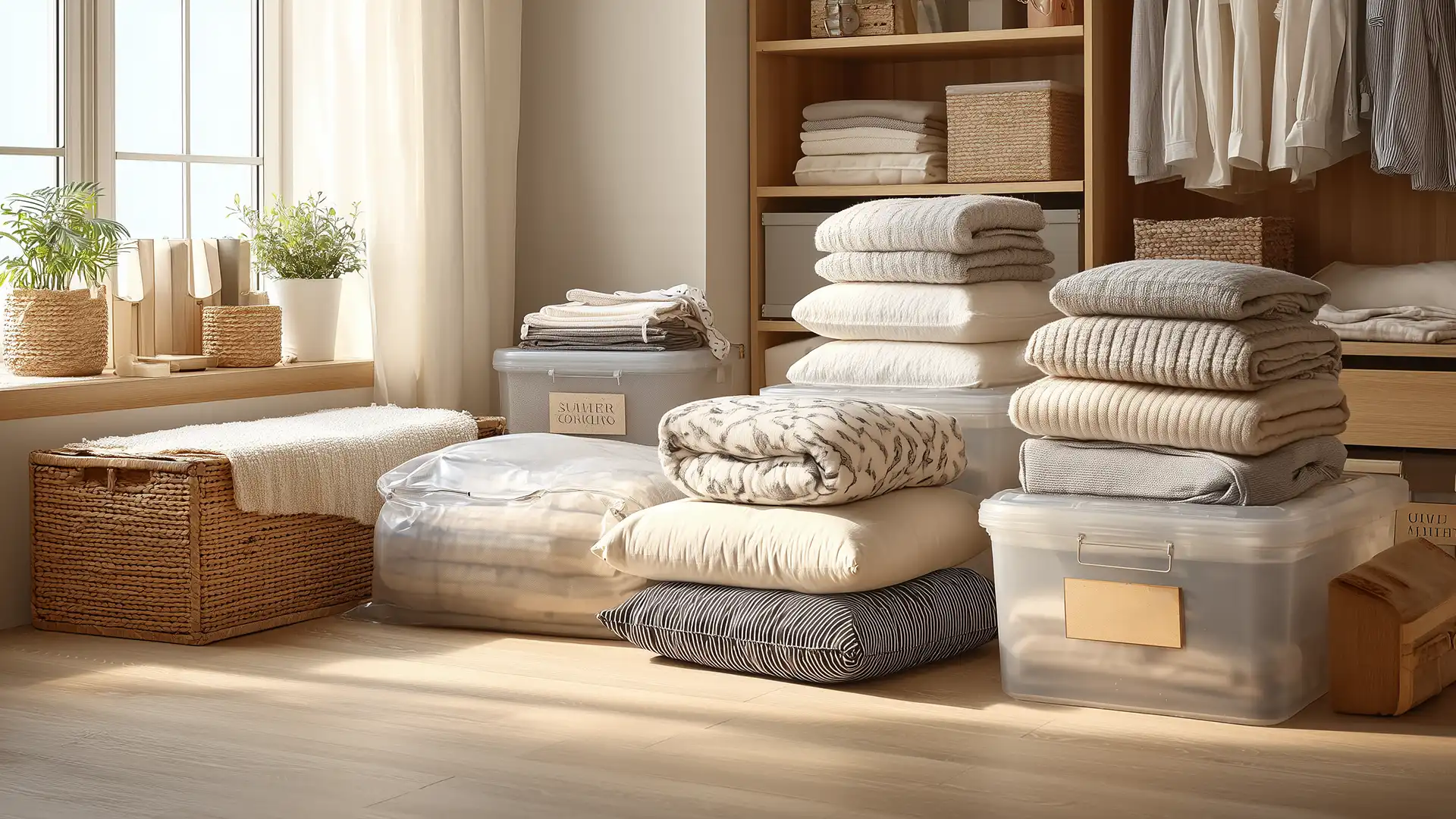
Storing your summer clothes: folding, covers, smart organization
T-shirts, dresses and swimwear: learn how to sort, fold and protect your summer clothes, and where to store them to free up space all year round in the Basque Country.
At the end of summer, T-shirts, swimwear and light dresses often stay in your wardrobe even though you will not wear them again for several months. The result: overflowing piles, creased clothes and the feeling you never have enough space. With some smart sorting, the right folding techniques and a good storage solution (at home or in a unit), your summer clothes can wait in great condition without cluttering your everyday life.
Why do summer clothes end up taking over your space?
Summer clothes may be light, but they add up quickly: souvenir T-shirts, “just in case” shorts, multiple swimsuits, dresses you mainly wear on holiday. Living close to the coast in towns like Biarritz or Tarnos often means owning even more light outfits and beach gear.
If you keep everything in the wardrobe all year long, autumn and winter become a real puzzle: unstable piles, creased clothes and no room left for seasonal footwear and jumpers. And when the cellar is damp or the garage already full, it becomes difficult to free up space without another option.
Step 1: sort before you store
Before you invest in boxes or covers, start with an honest sort-out:
- Keep everyday basics in good condition and pieces you really wore this season.
- Repair or alter items needing small fixes (hem, button, seam) and do it before storage so you do not forget.
- Donate or sell anything too small, no longer your style or duplicated.
- Recycle stained, worn-out or misshapen items you know you will not wear again.
The less you store, the easier the organisation. The goal is to keep only what you will be happy to find again next summer.
Step 2: folding properly to save space
Good folding saves a lot of volume:
- T-shirts and tank tops: fold into compact rectangles and store them vertically in drawers so you can see everything at a glance.
- Shorts and skirts: fold in three or four depending on length and avoid a strong crease in the middle.
- Light dresses: fold around a soft support (a scarf or T-shirt) to avoid sharp creases.
- Swimwear: rinse well, let dry completely and fold gently without over-compressing to protect the elastic.
- Delicate fabrics (linen, silk): use wide folds and place a sheet of tissue paper between layers.
You can also keep particularly fragile pieces on hangers, protected in a fabric cover.
Covers, boxes and vacuum bags: what should you use?
To protect summer clothes for several months, choose the right containers:
- Breathable fabric covers: ideal for delicate items, light jackets and dresses you want to keep crease free.
- Vacuum bags: great for non-delicate textiles (T-shirts, light sweatshirts, bed linen) but avoid them for wool or very fragile fabrics.
- Plastic boxes with lids: perfect to protect from humidity and dust, especially if you are storing items in a cellar or storage unit.
- Small pouches: to keep swimwear, beach accessories and sarongs together.
Remember to label each cover or box clearly: “Adult summer clothes”, “Swimwear & beach”, “Kids – summer”, etc. This will save time when the warm weather returns.
Where to store summer clothes for several months
If you have large wardrobes, you can dedicate a high shelf to neatly boxed summer clothes. In many Basque Country flats, that is not always possible:
- Cellars: best avoided if they are damp or poorly ventilated, as clothes may come back smelling musty.
- Garage or attic: can work if the space is healthy, but beware of big temperature changes.
- Seasonal self-storage unit: ideal for boxes of summer clothes, beach items, watersports gear or suitcases in our Anglet storage centre or another nearby facility, without cluttering the home.
A small 1 to 3 m² unit is usually enough for the whole family’s summer wardrobe, especially if you also store luggage and holiday gear there. To choose the right size, you can use our storage size guide and pick the most suitable option.
Setting up a seasonal “wardrobe” unit
If you opt for a unit, aim to group everything related to “summer mode” in one place:
- Group by person (one box per person or per couple) and by type (clothes, shoes, beach items).
- Store heavier boxes at the bottom (shoes, beach bags with accessories) and lighter clothing boxes on top.
- Keep a small aisle so you can reach a specific box without moving everything.
- Make a simple note on your phone listing what you have stored and where summer clothes are located.
- Use the unit all year round by switching summer and winter clothes as the season changes.
Checklist: storing summer clothes the right way
- Have you sorted your summer wardrobe (keep, donate, recycle) before storing it?
- Are all items clean and dry before folding and placing them in covers or boxes?
- Have you chosen suitable covers and containers for each fabric type?
- Do you have a healthy storage space (cupboard, unit, dry room) for several months?
- Are your boxes clearly labelled so you can find everything quickly next season?
You might also like
- Avoid cramming seasonal clothes into your main wardrobe: free up space for everyday items.
- Use a small, budget-friendly storage unit for clothes you only wear a few months a year.
- Keep summer clothes, shoes and accessories together so you can switch seasons in one go.
- Choose a clean, ventilated storage space to prevent humidity and bad smells.
- Take advantage of extended opening hours to pick up your clothes when the weather improves.
By sorting your summer wardrobe, folding it properly and storing it in the right place, you free up space all year long and rediscover your favourite outfits in perfect condition as soon as the sun returns. A small seasonal storage unit in the Basque Country can act as an extra wardrobe and keep your home from feeling overcrowded.