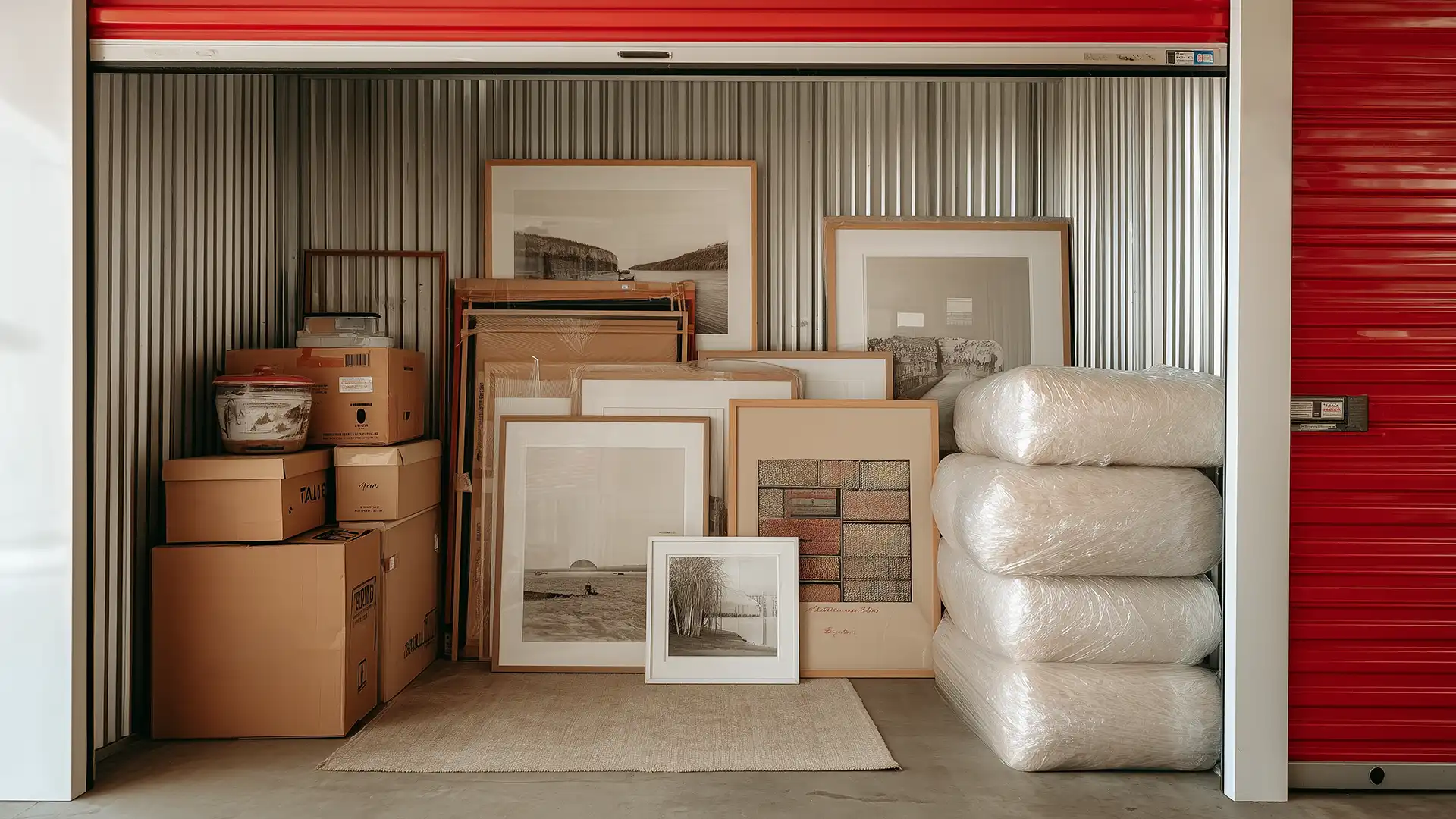
Fragile or Sentimental Items: How to Store Them Properly?
Crockery, glassware, photos, family keepsakes, collections… Tips to protect and store fragile or sentimental items at home or in a storage unit in the Basque Country.
We all own fragile or sentimental items that matter far beyond their monetary value: family crockery, crystal glasses, letters, photos, childhood toys, artworks, travel souvenirs… They are often the first things we worry about when moving, renovating or storing boxes for a long time. The good news: with a few simple methods – and, if needed, a nearby self-storage unit – you can protect them effectively over time.
Fragile vs. sentimental: what are we talking about?
Fragility is not only about material, and value is not only about price.
- Fragile items: crockery, glassware, ornaments, frames, mirrors, porcelain, electronics, musical instruments.
- Sentimental items: photos, letters, notebooks, children’s drawings, travel souvenirs, childhood toys, family heirlooms.
- Unique pieces: crafts, artworks, collections, wedding items, things that cannot be replaced.
- Emotional fragility: some items are sturdy in practice but emotionally irreplaceable.
The goal is not just to “get everything into a box”, but to reduce the risk of breakage, damp, loss or forgetting.
Step 1: declutter without feeling guilty
You cannot keep everything forever. Sorting does not mean denying your memories – it helps you better protect what really matters.
- Gather all fragile and sentimental items in one room: crockery, photos, notebooks, travel souvenirs, etc.
- Create three piles: “definitely keep”, “keep if possible”, “can donate / scan / photograph”.
- Digitise whatever makes sense: photos, letters, drawings, some documents.
- Pass on some heirlooms to other family members rather than keeping everything yourself.
- Limit bulky rarely-used items (full dinner sets, big ornaments) by choosing a few truly symbolic pieces.
The fewer fragile items you store, the more you can care for those you keep.
Step 2: choose the right boxes and packing materials
Containers and packing materials make a big difference to the risk of damage.
- Double-walled boxes for crockery, glassware and heavy fragile items.
- Wardrobe boxes or rigid containers for sentimental clothing and textiles (wedding outfits, baby clothes, special costumes).
- Airtight plastic boxes for photos, letters, notebooks and books in humid regions like the Basque coast.
- Protective fillings: bubble wrap, tissue paper, newspaper, packing peanuts, moving blankets.
- Dividers for large quantities of plates and glasses, or sheets of paper between individual pieces.
Whatever the box, fill empty spaces so items cannot move around inside.
Step 3: pack the main types of items correctly
A few simple rules are enough to reduce breakage.
- Crockery and glassware: wrap each item individually, stack plates vertically like records, place glasses upside down with separators.
- Ornaments and decorative items: protect delicate parts (handles, necks, extremities) first, then wrap the whole item.
- Frames and mirrors: tape a cross on the glass with masking tape, protect corners, add cardboard in front and behind, then bubble wrap.
- Books, notebooks and documents: use several smaller boxes instead of one very heavy box; use archival boxes for important papers.
- Sentimental textiles: store clean and dry in textile bags or acid-free boxes; avoid long-term vacuum-sealing for delicate garments.
Sentimental items: protecting memories as well as objects
For some belongings, the story matters as much as the physical object.
- Add a note to boxes or items (date, person, story) so the meaning is not lost over time.
- Photograph key objects before storage and keep a “Keepsakes” folder backed up in the cloud or on an external drive.
- Make a short inventory for boxes containing important memories.
- Group by person or period (childhood, travels, family branch) instead of mixing everything.
- Avoid burying memories under layers of other boxes – keep reasonable access to them.
Where to store fragile and sentimental items
The storage location is almost as important as the packing, especially in humid climates.
- In your home: dry, elevated shelves away from direct heat are best for the most precious or fragile pieces.
- In a cellar or garage: only if the space is dry, ventilated and not prone to flooding – and always in sealed plastic boxes on pallets or shelves.
- In a self-storage unit: recommended if space at home is limited or if you have many sensitive items to protect.
In a self-storage centre in the BAB area (Bayonne, Anglet, Biarritz), your boxes are kept in a clean, dry and secure building, far more reassuring than a damp cellar or street-side garage. In case of practical questions about self-storage (duration, conditions, what you can store), you can check our FAQ.
Why a storage unit is ideal for fragile and sentimental belongings
Compared with improvised storage, a unit offers clear advantages when things really matter to you.
- Enhanced security (access control, CCTV, locked building).
- More stable environment than most cellars or garages.
- Better organisation with shelving, labelled boxes and a simple layout plan.
- Flexible access so you can retrieve or consult keepsakes when you want.
- Small size is enough: a well-organised 1–3 m² unit holds numerous fragile and sentimental items.
To estimate the space you need, you can use our storage size guide and ask our local teams in Bayonne and Anglet for advice.
Case study: preserving family memories without filling the flat
In Bayonne, Marie inherits several boxes of photo albums, old crockery and family keepsakes. Her 3-room flat is already full, and she worries about damaging these items or living with stacks of boxes. She rents a 1.5 m² storage unit in a nearby self-storage centre. She digitises part of the photos, carefully packs the crockery, places albums in archival boxes and sets up a small shelf in the unit. At home, she keeps only a few selected pieces on display; the rest is protected and accessible without cluttering her living space.
You might also like
- Identify and group your truly fragile and sentimental items.
- Invest in sturdy boxes and proper packing materials.
- Pack crockery, frames, books and textiles carefully to avoid damage.
- Choose a dry, stable and secure location for irreplaceable items.
- Use a storage unit as an “external memory” to protect your story without overcrowding your home.
Have you accumulated fragile heirlooms, photo albums and keepsakes that you are afraid of damaging? By sorting, protecting and storing them in a self-storage unit in the Basque Country, you keep them safe while freeing up space at home. Estimate your needs, explore our centres in Bayonne and Anglet and book your storage unit online in just a few clicks.