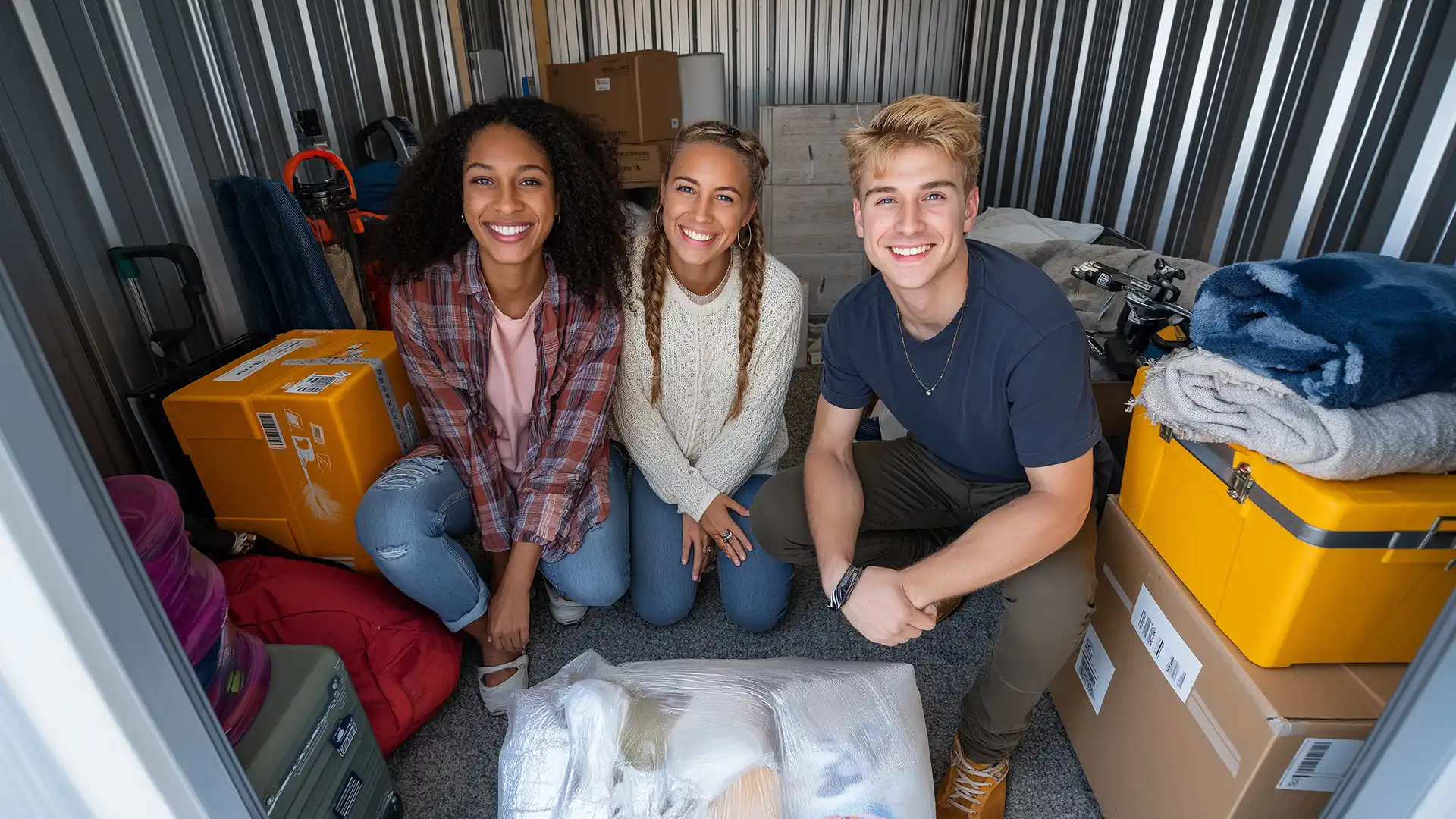
Blended families: how to share a storage unit?
Alternating custody, frequent moves, duplicate furniture… How can a blended family share a self-storage unit smoothly and fairly?
Alternating custody, several homes, new partners, children growing up… In a blended family, belongings add up quickly: beds, toys, clothes, school items, sports equipment, boxes of memories. To avoid clutter in every flat or house, sharing a self-storage unit can be a smart solution – if it is well organised. Here is how to turn your unit into a neutral, practical space for the whole family.
Why a storage unit makes sense for blended families
When children move between homes, space and logistics quickly become more complex.
- Two or more homes to equip: one for each parent, sometimes a third for a step-parent.
- Many duplicate items: beds, clothes, toys, school supplies, bikes…
- Frequent changes: new baby, evolving custody arrangements, one parent moving house.
- Memories from different life stories: photos, old furniture, sentimental items.
- Seasonal gear: skis, suitcases, beach and camping gear that you do not want piled in every hallway.
A shared unit can become a common “base camp”: a neutral place where you store what does not need to live permanently in each home.
Step 1: agree on the purpose of the shared unit
Before renting, decide together what the unit is for. This prevents it from turning into a giant, tension-inducing dumping ground.
- Children’s belongings unit: clothes by size, toys, books, sports gear, school memories.
- Life transition unit: furniture from old homes, boxes of memories, items no one wants to keep at home but no one wants to throw away.
- Seasonal unit: sports gear, luggage, Christmas decorations, garden furniture.
- Mixed unit: a bit of everything – but with clearly defined zones for each person or household.
The key is that everyone knows what can go into the unit, and what must come out first when you need to make space.
Step 2: set a few ground rules
Sharing a unit is like sharing a flat: a few clear rules can prevent many disagreements.
- Who signs the contract? One adult (or couple) is the official tenant and contact person for the facility.
- Who has access codes or keys? Decide which parents, step-parents or older children can access the unit.
- How are costs split? 50/50, according to space used, or another written agreement.
- What happens if someone wants to stop? Plan ahead for changes in contribution or if one parent moves away.
- Privacy: some boxes (sensitive memories, documents) should be clearly labelled as “private”.
You can write this down in a short “storage pact” (shared note or document) so everyone knows the rules.
Step 3: organise the unit for several households
Good physical organisation from day one makes shared use much easier.
- Divide the unit into zones: “Parent A”, “Parent B”, “shared children’s zone”, “seasonal zone”.
- Use colour codes on labels or tape to distinguish each person or child.
- Add shelving to separate belongings by person or by type (toys, clothes, sports, memories).
- Create a simple layout plan (photo or drawing) shared in a family group chat.
- Keep a central “buffer space” for items in transit (boxes to sort, donations).
A clearly organised unit helps avoid “I can’t find anything” and “you took my stuff without asking”.
Alternating custody: using the unit as a practical relay
The unit can also simplify handovers when children move between homes.
- Prepare a crate or box per child with clothes, shoes and sports or school items.
- Drop off bulky items that do not fit in a bag (large toys, sports gear) and pick them up when needed.
- Manage duplicates: some toys stay with Parent A, others with Parent B, and excess goes to the unit.
- Use the unit as neutral ground to exchange boxes without entering each other’s homes.
For older children, a dedicated crate or shelf can serve as a small personal space for items they do not want to leave all the time in one home or the other.
What to store in a blended-family unit
Here are some typical items that fit naturally into a shared unit:
- Furniture in waiting: spare children’s beds, extra chests of drawers, desks and chairs.
- Clothes and gear by age or size: baby items, clothes for younger siblings, sorted by age.
- Bulky toys: playhouses, big tracks, ride-on toys, play kitchens that can rotate between homes.
- Sports and leisure equipment: bikes, skis, sledges, camping gear, beach gear.
- Memories and archives: albums, drawings, keepsakes from different stages and relationships.
What size unit for several people?
The right size depends on how many children and how much furniture you have, but here are some guidelines:
- 2–3 m² for two adults sharing mostly boxes, some furniture and toys.
- 3–4 m² for a full children’s bedroom plus seasonal equipment.
- 4 m² and more for several children, multiple sets of furniture and lots of sports gear.
Use our unit size calculator and ask our teams in Bayonne or Anglet for a tailored recommendation.
Case study: one shared unit for a blended family
In Bayonne, Julie and Marc live separately, each with children from previous relationships and a new baby together. Between extra beds, clothes by size, toys, ski gear and beach items, both homes feel crowded. They rent a 4 m² self-storage unit together in our Bayonne - Les Arènes centre. They divide it into four child zones plus a seasonal area, using a different label colour for each child. Bulky toys, outgrown clothes, sports gear and spare furniture all move into the unit. At every season change or when custody arrangements evolve, they visit the unit together to adjust. The result: lighter, calmer homes, fewer arguments over “who keeps what” and a neutral place to manage the family’s shared belongings.
You might also like
- Clarify the purpose of your shared storage unit before renting.
- Agree clear rules about access, costs and privacy.
- Organise the unit into zones, colours and shelves so everyone can find their belongings.
- Use the unit as a practical relay for alternating custody and seasonal changes.
- Adjust unit size as your blended family evolves.
Living in a blended family in Bayonne, Anglet or Biarritz and running out of space in every home? By sharing a self-storage unit in the Basque Country, you create a neutral, organised place for furniture, toys and memories from all branches of the family. Estimate your needs, explore our centres and book your unit online in just a few clicks.