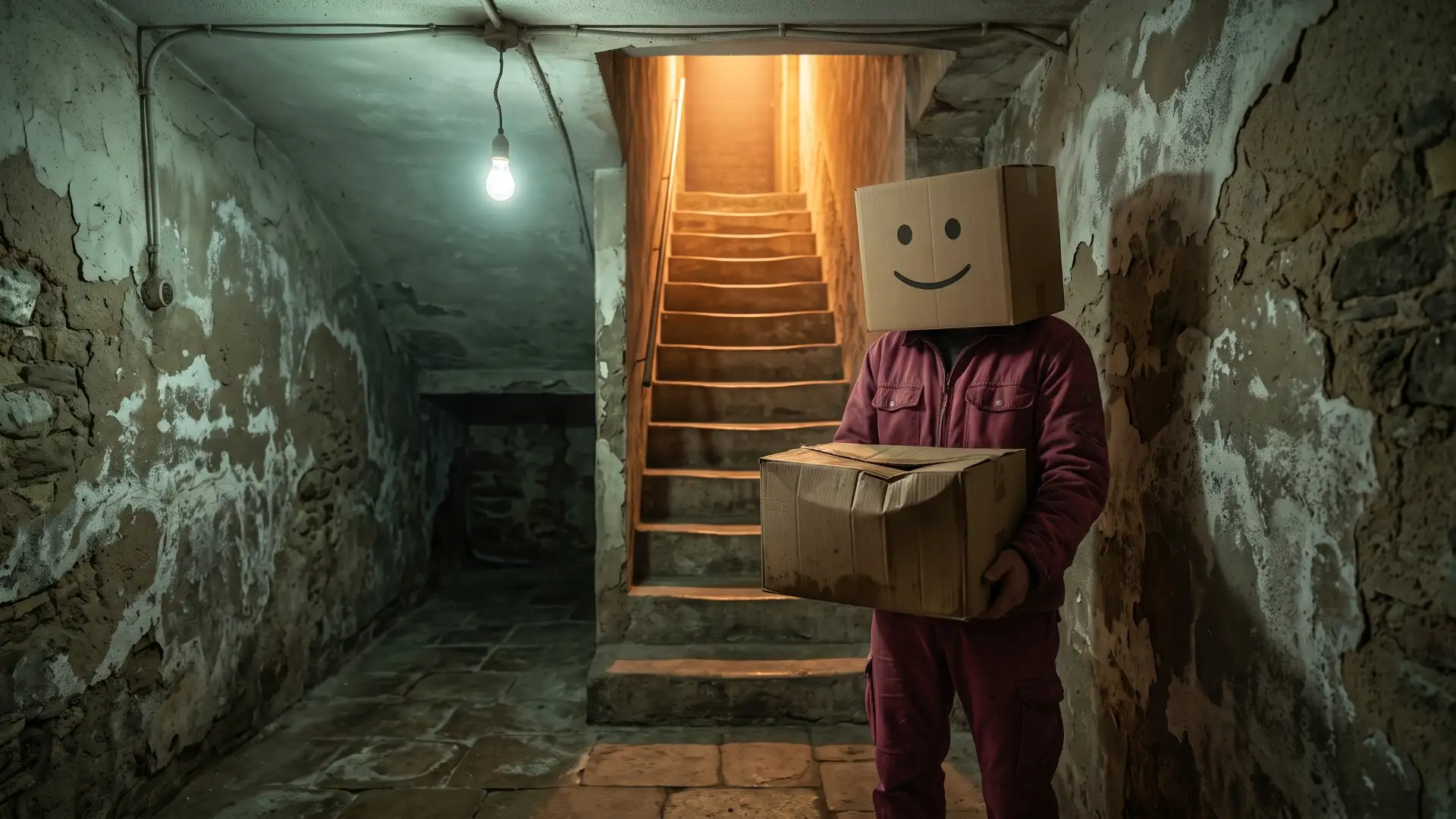
Damp Cellar in an Old Building: What Moisture Does to Your Belongings
Saltpetre, salty sea air, soggy boxes: what a damp cellar in an old building does to wood, leather, photos and metal, and how to get everything dry again.
In the old apartment buildings of Biarritz, around Les Halles or in the Saint-Charles district, and in those of Petit Bayonne and Saint-Esprit, the cellar often ends up as the junk room. Down go the boxes from the last move, grandma's chest of drawers, the photo albums, the summer bike. Then the door closes. Yet these stone basements, wedged between the ocean and the Adour, are no place to store anything: the walls soak up water, saltpetre blooms along the base of the stonework, the air is heavy with salt, and a vent the size of a shoebox passes for ventilation. From one week to the next, nothing shows. After a winter, it does.
Wood, leather, paper, metal: damp doesn't treat them all the same
Some materials swell, others go mouldy or rust. And a few quietly stop working without showing a thing.
- Solid wood and chipboard. Solid wood takes on moisture from the air: drawers stick, a tabletop warps, and the joints start to work loose the day the air turns dry again. Chipboard swells along the edges and never gets its shape back.
- Fabrics and leather. Often the first to suffer. A white or greenish bloom appears on a jacket, a pair of boots, the arm of an armchair. That musty smell works its way into the fibres, and it's hard to shift.
- Papers and photos. Small rust-coloured spots, rippled pages, stacked prints that end up stuck together. Books, for their part, hang on to that cellar smell for years.
- Metal. Near the coast, it takes a double hit: damp makes it rust, and the salt carried on the air speeds things up. Tools, bike chains, furniture legs, zips: nothing escapes.
- Electronics. The most deceptive of all. A turntable or an old computer can look perfectly fine while condensation has corroded the contacts inside. You find out the day you plug it back in.
Cardboard makes everything worse. Set straight on the floor and pushed up against a stone wall, it wicks moisture from underneath and from behind, goes soft, then sags onto whatever is inside.
Is your cellar affected? A few signs don't lie: the smell that hits you as soon as the door opens, white powdery marks along the bottom of the walls, water rings on the boxes, a box that tears when you lift it, fogging inside a plastic crate. Two or three of these together, and it's time to head downstairs and take stock.
Before you move anything: sort, dry, repack
No need to throw everything out, or to keep it all. The right move is to bring your things upstairs and set aside a weekend.
- Sort outdoors, in daylight. A balcony, a courtyard, a corner of the garage: open the boxes in the fresh air and make three piles, what's fine, what can be saved, what's gone. One mouldy item packed among healthy ones will end up contaminating them.
- Don't repack anything damp. Brush down and air out a piece of furniture for several days, wipe then condition leather, scrub a tool before adding a drop of oil. Sealing up something that's still wet just takes the problem along with it.
- Switch to new boxes. The ones that have spent months in a cellar hold on to spores, even if they look dry. Get new, sturdy ones, and save plastic crates for things that don't need to breathe: crockery, toys, ornaments.
- Skip the stretch wrap on wood and leather. It traps condensation right against the surface. A fabric cover or a clean old blanket does a much better job.
- Keep papers and photos apart. A closed box, tissue paper between the prints, and never at the bottom of a stack.
- Take the batteries out of electronics. Remove batteries and battery packs, put the device back in its original packaging if you kept it, otherwise in a well-padded box, and store it up high.
The cellar for the wine, a storage unit for everything else
You can limit the damage downstairs: metal shelving, a few centimetres of air between your things and the wall, the door left ajar on dry, breezy days. But a stone basement a short walk from the Adour or the Grande Plage will always be a stone basement. For what really matters, many of our customers prefer to get their belongings out of the cellar and into a proper storage space.
- A clean, dry, ventilated building. No seeping walls, no vent opening onto the street: your boxes stay boxes.
- A space that's yours alone. Every storage unit is private, inside a facility under video surveillance, with an electronic lock and a personal access code. Nobody else goes in.
- The right size, without guesswork. For a few boxes, some albums and an armchair, a small unit of 1 to 3 m² is often enough. You can estimate your volume in a few clicks, and if you got it wrong, switching units during your rental costs nothing.
- Your car right by the door. At our Bayonne Les Arènes facility, the drive-up units open onto the lane where you park: unload the boot and you're done. Access is open 24/7. A far cry from narrow cellar stairs and a timer light that cuts out halfway down.
- Advice in person. The Les Arènes front desk welcomes you Tuesday to Saturday, and the small on-site shop can help out with boxes, covers and tape.
Claire lives on the third floor of an old building near Les Halles in Biarritz. One November morning, she found her boxes of books sagging and the leather of her old armchair speckled with white spots. She sorted everything on her balcony, had the armchair cleaned, then moved it all into a small storage unit at Les Arènes in Bayonne, about twelve minutes away by car. These days she parks right outside her unit instead of circling the neighbourhood, and her cellar is only used for wine.
Live on the coast? Take a look at our page on self-storage near Biarritz: our Bayonne and Anglet facilities are around ten minutes away by car. And from Petit Bayonne or Saint-Esprit, Les Arènes is just a few minutes away.
Kept dry for one winter or for several years
The contract runs for one month minimum, then with no commitment: just give 15 days' notice before you leave. So you can keep your things safe while the cellar gets treated, or leave them in the dry for much longer. Either way, drop by now and then. Open a box of papers at random, check the leather, slide a drawer open. Keep an aisle clear so you can reach the back of the unit, and put what you use often within easy reach. Then there's insurance, which is mandatory, with minimum cover of €5,000: your home insurance may already cover stored belongings, otherwise the team can take out a policy for you. Not sure? Just ask at the front desk.
Further reading
- Musty smell, white marks, soft boxes: three signs it's time to go down and check.
- Sort in the open air and set aside anything mouldy straight away.
- Dry every item before repacking it, even if it takes a few days.
- New boxes, never set on the floor or pushed against a stone wall.
- A fabric cover for wood and leather, a closed box for papers and photos.
- For what matters, a clean, dry, ventilated storage unit beats a stone cellar.
Your cellar smells musty and you're no longer sure what state your boxes are in? Come and see us at Les Arènes, Tuesday to Saturday, or book your storage unit online, no bank card required. We'll help you choose the right size to get everything dry again.