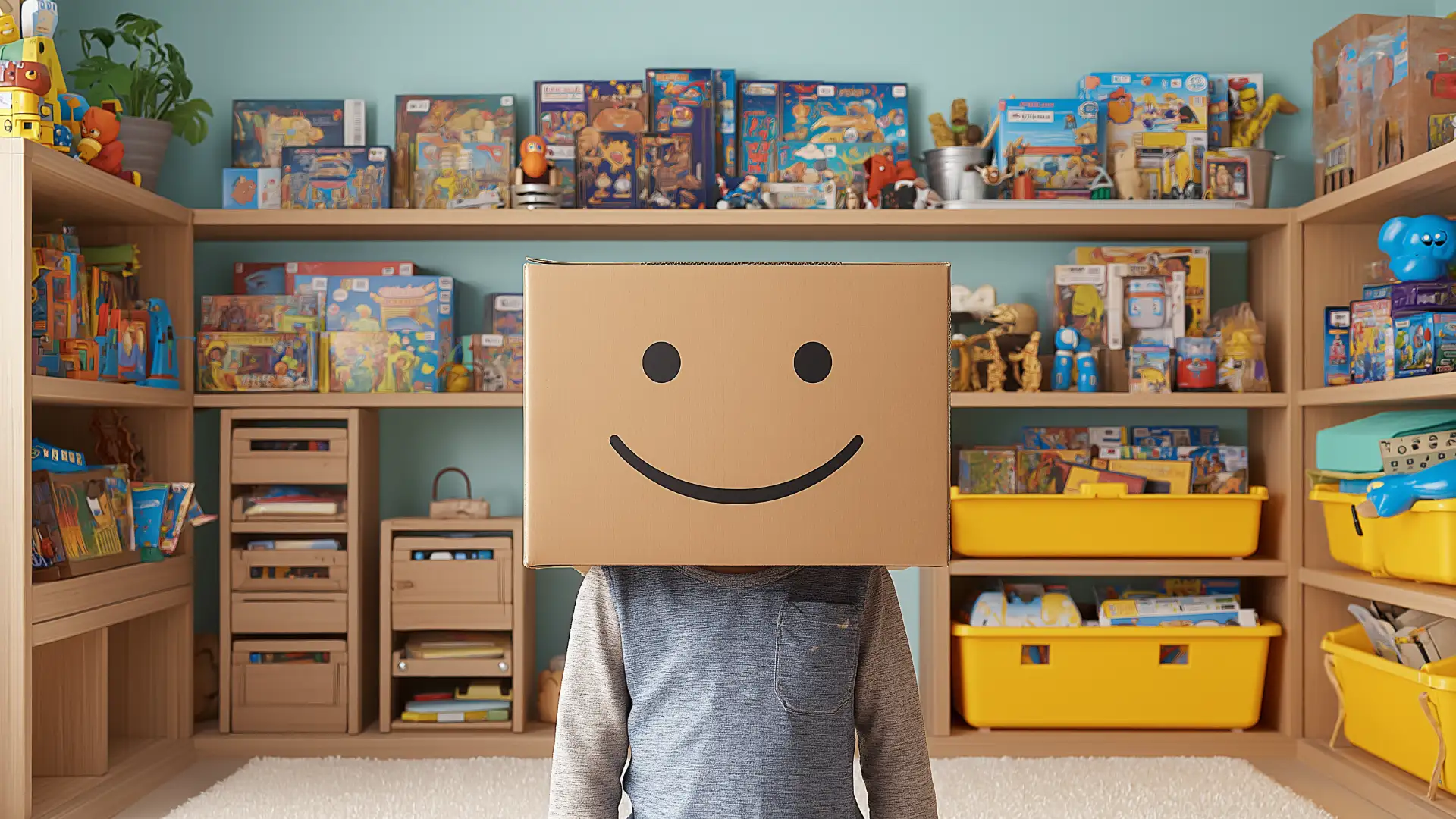
February declutter: sort kids’ toys and winter clothes
In February, sort kids’ toys and winter clothes without filling the house: a simple method plus storage tips around Bayonne & Anglet.
February is often the month when you want to breathe again at home. But with kids, winter leaves a footprint: bulky coats, snowsuits, boots, new toys, board games… and a home that feels like permanent storage. The good news: you can declutter without throwing everything away, by setting up a smart rotation.
When everyday life spills over: what winter adds (without you noticing)
- Outgrown clothes: puffer jackets, ski trousers, thick jumpers kept “just in case”.
- Shoes and accessories: boots, extra pairs, single gloves, duplicated hats and scarves.
- Bulky toys: big boxes, tracks, garages—new gifts arrive but older toys stay.
- Board games and indoor activities: boxes everywhere, missing pieces, shelves overflowing.
- Winter gear: sleds, rain suits, weekend and holiday equipment.
- Sentimental boxes: first outfits, keepsakes, drawings—worth keeping, but not in the way.
The right approach: sort first, then move out what doesn’t need to stay at home
- Closets that actually close and a hallway free from “to-sort” piles.
- A calmer kids’ room: fewer visible toys means more space to play and less visual noise.
- Smoother mornings: winter essentials grouped together, the rest out of the daily circuit.
- An easy rotation: keep “now”, store “later” (next size, next season).
- Less time spent tidying: fewer urgent resets at the end of the day.
Before/after: the kids’ room becomes a real room again
On the BAB area, a family with two children had turned one bedroom into a “dump room”: bags of outgrown clothes, toy boxes, a sled, Christmas leftovers, and a wardrobe blocked by piles of coats. In February, they did a two-step reset: donate/sell what wouldn’t be used again, and group the rest by “season” and “size”. A small unit, at our Anglet storage centre, held next-size clothes and bulky toys for rotation. Back at home, they freed an entire wall, rebuilt a simple shelf, and created a reading corner—without having to “move the whole room” to find a missing glove.
A simple (realistic) February method to sort children’s belongings
- Make 3 clear piles: keep now / donate-sell / store (next size, next season).
- Create a “winter capsule”: keep only what’s used every week (everything else leaves the closet).
- Store by size and season: one box = one size (e.g., “Age 4 – winter”), with a checklist on top.
- Reduce toy pressure: set aside 20–30% of toys and rotate every 3–4 weeks.
- Estimate the right unit size: use the volume estimator to see if a small unit is enough.
- Keep a “winter essentials” bin: one box in the entryway (hats/gloves/scarves), the rest out of the home.
More tips on space-saving and seasonal rotation
- Start by sorting what you truly use day to day.
- Choose a small unit (1–3 m²) for items you only need occasionally.
- Use the unit’s height to stack boxes safely.
- Swap a damp cellar for a clean, ventilated and secure storage space.
- Keep your home pleasant to live in: the surplus has its place with us.
If you want this declutter to last, pick one area to “win back” (kids’ room, entryway, hallway closet) and decide what must stay within reach. The rest can live in a clean, secure storage unit on the BAB area—so you keep the essentials at home and gain space without moving house.